How it works
How PerimeterScope works
PerimeterScope listens. It is receive-only toward aircraft and drones. Four steps turn the signals already in the air into one clear picture.
From signal to decision
Receive
A set of antennas picks up three kinds of broadcasts: ADS-B on 1090 MHz and UAT on 978 MHz from crewed aircraft, and Remote ID from drones over Bluetooth and Wi-Fi. A GPS antenna gives the unit its own position. The sensing chain is receive-only.
Combine
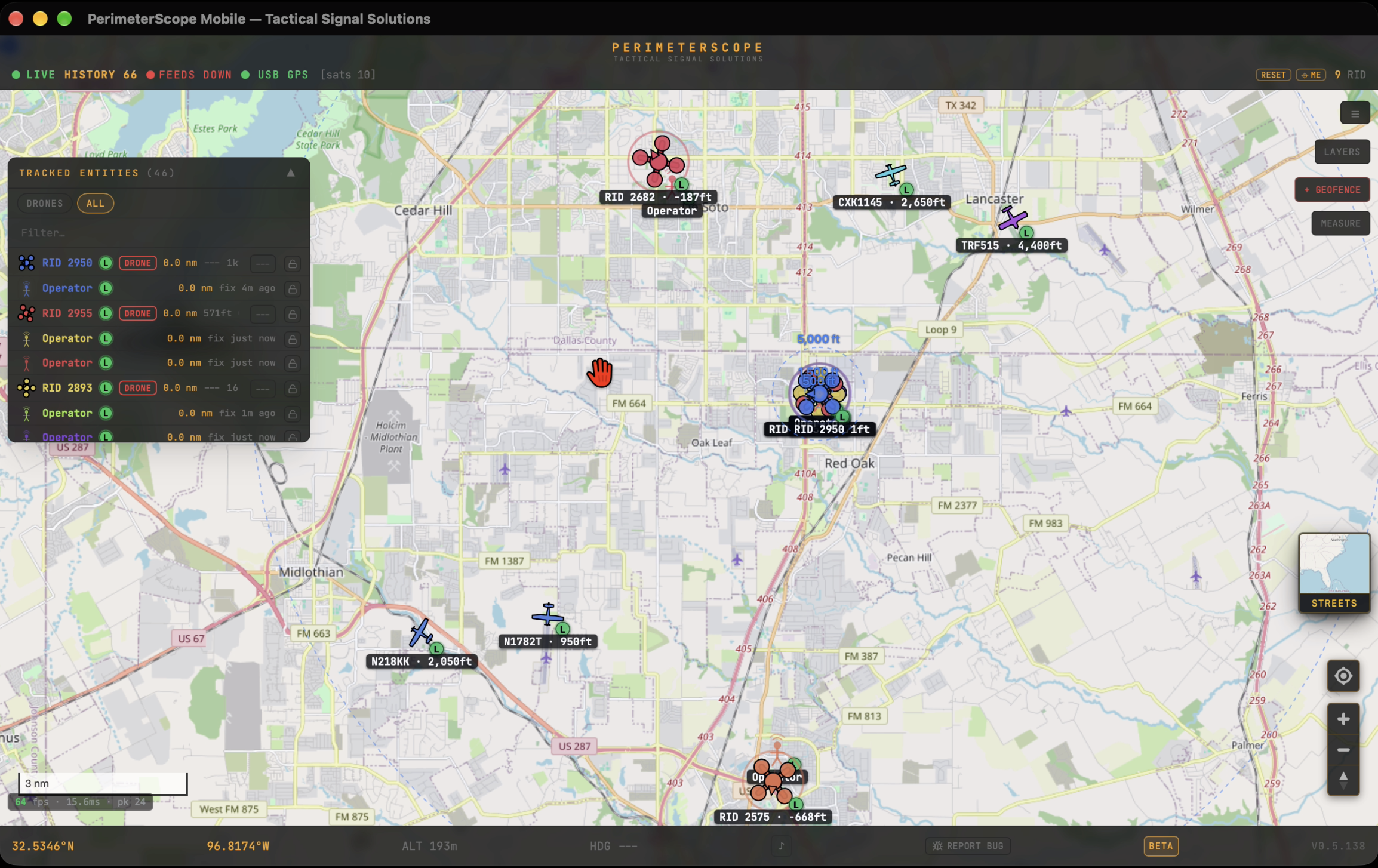
Aircraft and drones appear together on one live map, with live weather radar underneath. Each one shows its identifier and position, plus altitude and speed where they are broadcast. When a drone broadcasts its operator's position, that shows too.
 © 2026 - Tactical Signal Solutions
Alert
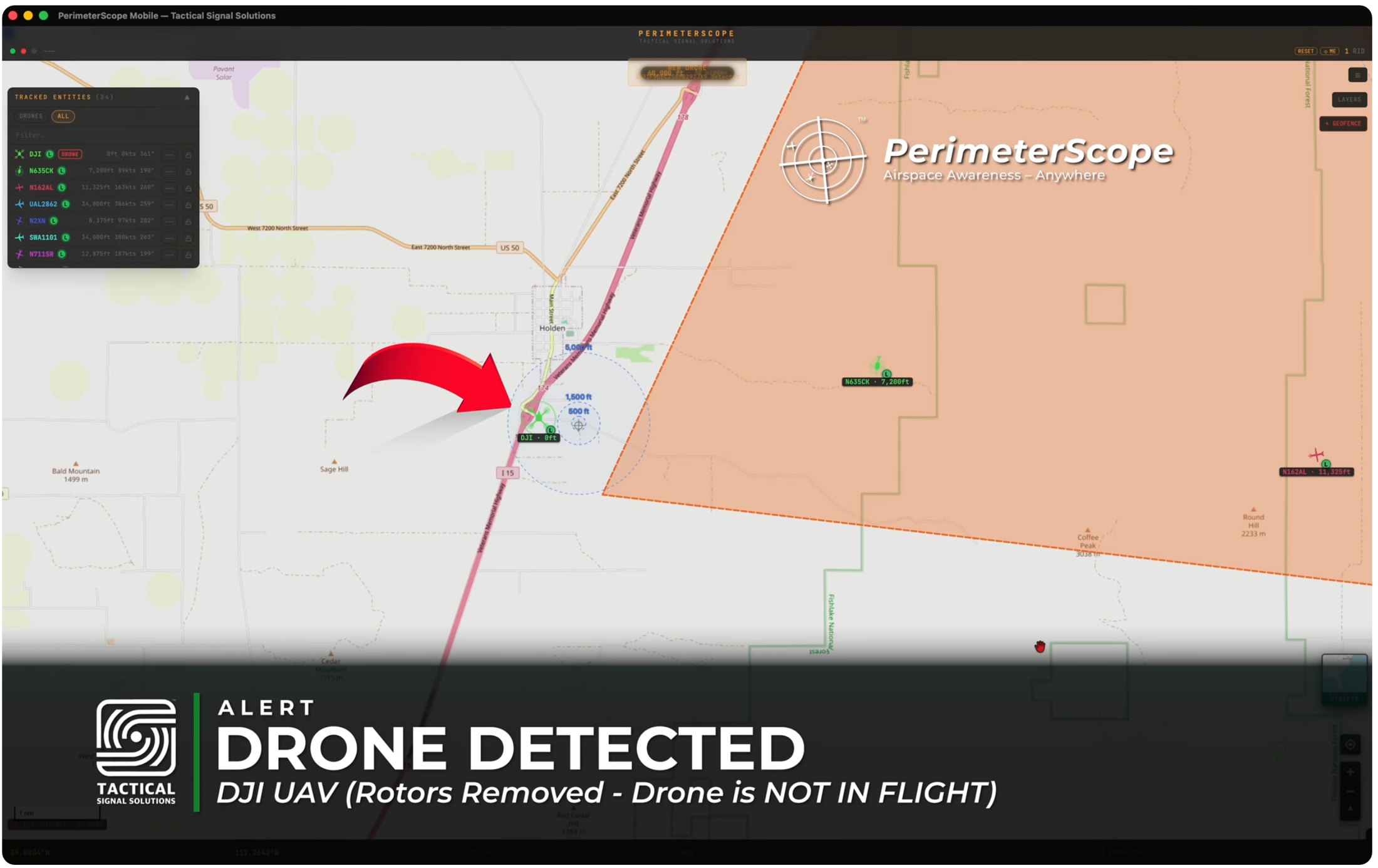
TFRs are imported automatically, so the restricted airspace around your incident is on the map without manual entry. Draw your own geofence around a site or perimeter too. PerimeterScope alerts you when a drone appears inside or near a boundary.
To keep alerts meaningful, whitelist known aircraft by squawk code or tail number. Your own firefighting aircraft, for example, can stay quiet, so operators are not worn down by false alarms and notice the ones that matter. You decide what to do with the information.
 © 2026 - Tactical Signal Solutions
Share and record
PerimeterScope records what it sees. Detections from the unit also appear in real time on the ADS-B Exchange global map, so the picture reaches beyond your own site.
Inside the case
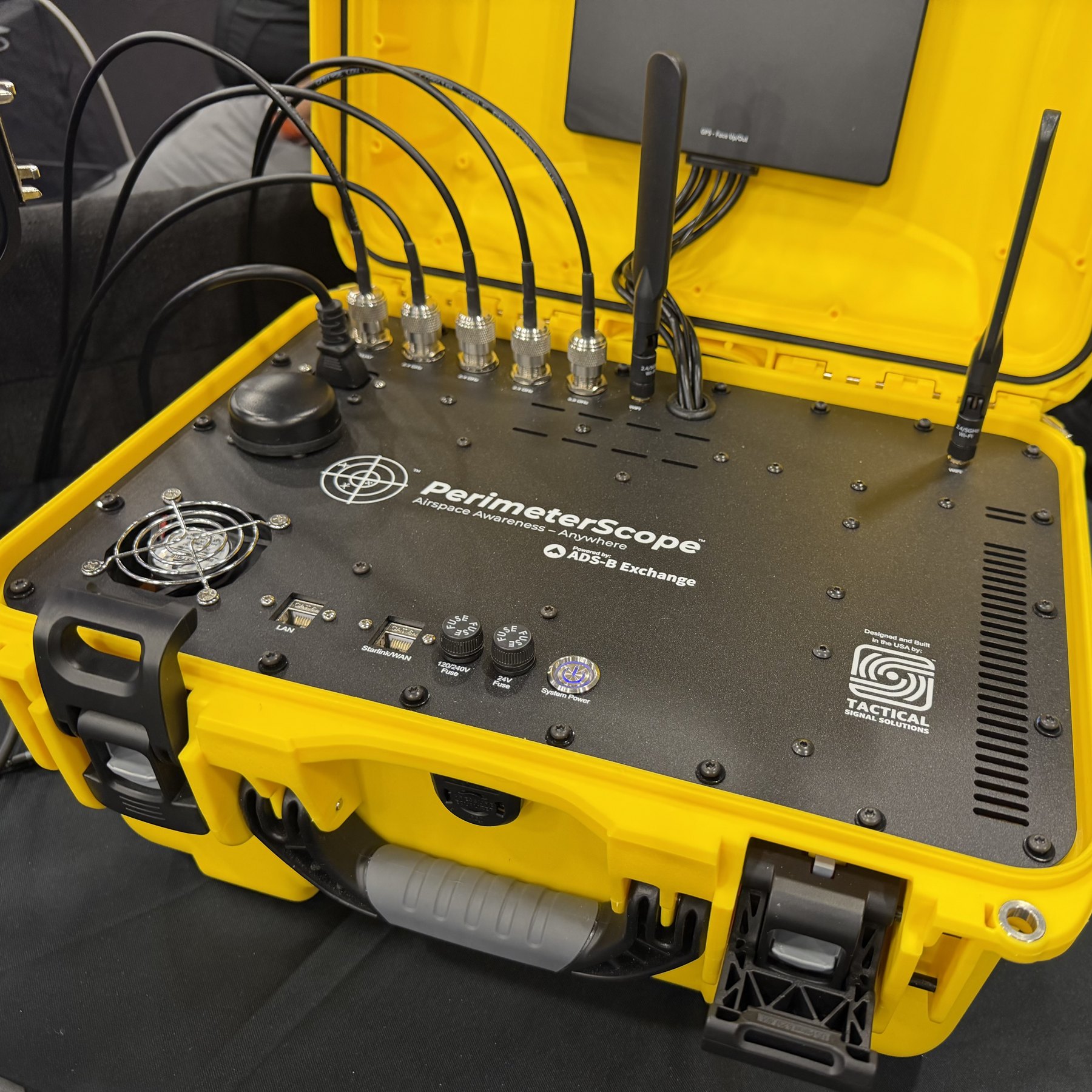
The rugged case holds the receivers, the power system, and ports for a LAN connection and a Starlink or WAN connection. One person can set it up. The panel is marked "Designed and Built in the USA by Tactical Signal Solutions" and carries the "Powered by ADS-B Exchange" mark.
 © 2026 - Tactical Signal Solutions
What it can't do
PerimeterScope only sees what broadcasts. A drone that is not broadcasting Remote ID will not appear on the map, and FPV detection is still in development.
PerimeterScope does not jam, block or take over any signal. It has no countermeasure features by design. It is awareness only, and it supports your judgment without replacing your procedures or your command authority.
Where it has been tested
- Hydra Fire, Bosque County, Texas
- Wild Goose Fire, Utah
- Spokane Complex fires, Washington
- Red Oak, Texas: at a Walmart drone delivery site, PerimeterScope detected 12 Zipline delivery drones, many in the air at the same time
- Starship launch, South Padre Island, Texas: during the June 2026 attempt, which was aborted, PerimeterScope detected a SpaceX DJI camera drone near the launch pad, inside the TFR
- FIFA events in Miami and Dallas, including a drone detected near the FIFA Fan Zone in Miami
- Near the Skyway bridge, Florida, where PerimeterScope detected an illegally operated drone
Starship launch TFR, South Padre Island, Texas.
Status
PerimeterScope is in beta, with field validation underway, and will be available soon. An enterprise version for permanent mounting is in development.